The Shadow That Followed Charlotte Green
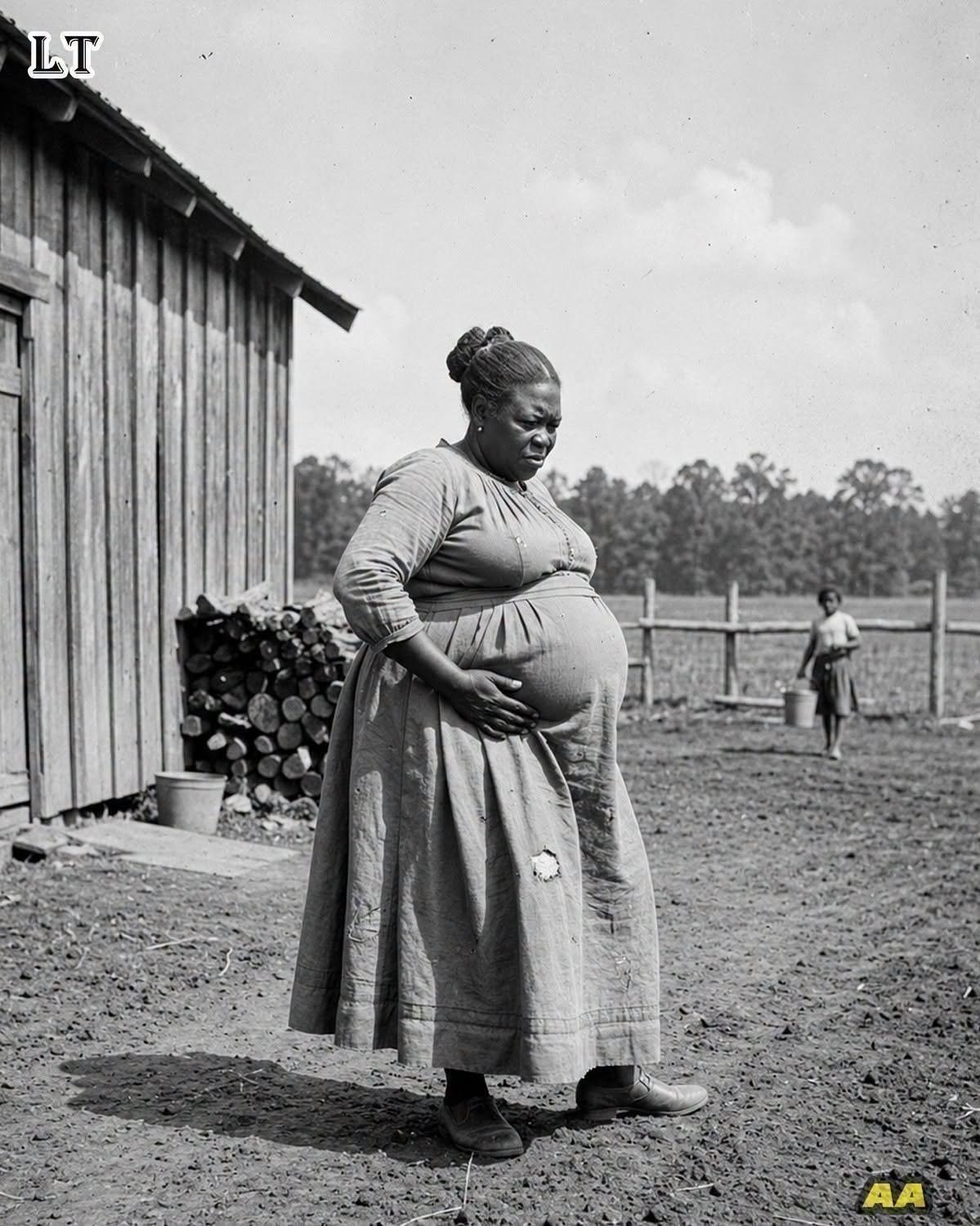
In the autumn of 1870, along the Arkansas River near Pine Bluff, there was a woman whose appearance had become so familiar that most people no longer questioned it.
Her name was Charlotte Green, though many in the community called her Lahi, and she was a woman who had lived through some of the most difficult changes in American history. She was not yet forty years old, but years of hardship had left visible marks on her face and body.
Her hands carried the evidence of a lifetime spent working with cold water, harsh soap, and endless household labor. She had survived slavery, witnessed the collapse
of the plantation system that once controlled her life, and attempted to build a new existence in a world that was still struggling to redefine itself after the Civil War.
Yet one mystery remained attached to her name. For nearly twenty years, Charlotte’s abdomen had remained unusually enlarged. Neighbors noticed it, physicians examined it, and
rumors followed her through every stage of her life, but no one had a clear explanation. She appeared as though she were carrying a child, yet no child was ever born. Over time,
people stopped asking questions because the condition had simply become part of who Charlotte was. Her body carried a visible reminder of something that no one around her
could understand, and even those who cared for her had learned to accept that some mysteries might never be solved.
The roots of Charlotte’s suffering stretched back to a much earlier period. She had been a young woman living under a system that gave her little control over her own life or future.
The years of slavery had placed countless burdens on women like her, forcing them to endure physical hardship, separation from family, and medical neglect. After emancipation,
freedom brought new possibilities, but it did not erase the consequences of the past. Charlotte carried those experiences with her, and the unexplained condition that remained with her
became another chapter in a life already shaped by uncertainty.
A Night When The Past Returned
On a rainy evening in 1870, something changed inside Charlotte’s small cabin near the Arkansas River. The storm outside had settled over the region, with rain striking against the
roof while the wind moved through the surrounding trees. Inside, Charlotte lay on a simple mattress near the fading warmth of a fire, experiencing pain unlike anything she had felt in
many years. Her breathing became heavier, and the discomfort that had troubled her body for so long seemed to intensify.
Beside her was Aunt Dina, an experienced midwife who had spent decades helping women through difficult births. Dina had witnessed countless medical situations during her lifetime. She had assisted mothers through complicated deliveries, treated illnesses with traditional remedies, and
cared for women who had little access to formal medical attention. Yet even she understood that Charlotte’s situation was unlike anything she had encountered before. The woman
she had known for years seemed to be approaching some kind of conclusion to a mystery that had lasted nearly half her life.
Charlotte’s younger companion, Esther, watched from across the room with fear and confusion. For as long as Esther could remember, Charlotte’s unusual condition had always
been present. She had never known Charlotte without the swollen abdomen that had become such a defining part of her appearance. To her, it was simply something that
existed, something never explained but always accepted. The possibility that it might finally change was difficult to imagine.
As the storm continued outside, the cabin became a place where past and present came together. The woman who had carried years of unanswered questions was now facing
a moment that could reveal the truth behind her suffering. Nobody in that room knew what the coming hours would reveal, but everyone understood that Charlotte’s life was about to change forever.

The Physician Who Could Not Explain The Condition
When Dr. Elijah Ward arrived at the cabin, he carried years of experience and the confidence of a physician who believed he understood the limits of the human body.
He had once served families connected to the plantation system before the Civil War, and after the war he continued practicing medicine in the region. Over the years,
he had examined Charlotte several times and offered explanations based on what he could observe. A tumor, a growth, or another unusual internal condition seemed more likely than anything else.
The idea that Charlotte could still be carrying a pregnancy after nearly twenty years seemed impossible. Medical understanding at the time did not provide an easy
explanation for what appeared to be happening. Ward approached the situation cautiously, knowing that Charlotte’s condition had challenged every assumption he had
previously made. When he examined her again during that stormy night, however, something about the situation forced him to reconsider.
His expression changed as he carefully examined the shape beneath her skin. The condition did not appear random or irregular in the way he expected from a typical growth.
There were forms and structures that suggested something far more complicated. For the first time, the physician who had always believed he understood Charlotte’s condition found himself uncertain.
That uncertainty changed the atmosphere inside the cabin. Aunt Dina recognized that something unusual was happening, and Charlotte herself could sense
that the explanation she had waited years to discover might finally arrive. After decades of carrying something no one could name, she was no longer
simply the woman with the mysterious condition. She was someone standing at the edge of an answer.
The Long Hours Before The Truth
The hours that followed were filled with exhaustion, uncertainty, and careful attention. Water was heated, cloths were prepared, and the small cabin became a
place of intense focus. Aunt Dina relied on the experience she had gained over many years, while Dr. Ward observed with growing concern. The situation did not
follow the pattern of a normal medical event, and every person in the room understood that they were witnessing something rare.
Charlotte’s strength began to fade as the long night continued. The pain that had begun as a mystery became increasingly difficult to endure. Yet beneath the
fear was another emotion that had been absent for years: the possibility of finally being free from the burden she had carried. Whether the outcome brought
relief, sadness, or another unanswered question, Charlotte knew that the weight she had lived with for so long was approaching an end.
Outside, the world continued as normal. The river flowed, the rain fell, and distant sounds of life carried on beyond the cabin walls. But inside that small room, the
focus remained entirely on one woman and the secret her body had carried through decades of change. The end of slavery, the rebuilding of communities, and the
transformation of the South had all happened while Charlotte lived with this private struggle.
When dawn approached, the people inside the cabin realized
that the moment they had waited for had arrived. Charlotte’s body, which had carried the consequences of a long-forgotten event for so many years, had finally released what it had held.
A Discovery That Changed Everything
After the long night ended, Charlotte rested in exhaustion.
For the first time in many years, her abdomen was no longer swollen in the same way. The physical change was immediate, but the emotional impact was even greater.
She had spent most of her adult life carrying something that others could see but never understand. Now the mystery had finally been revealed.
What was discovered was not a living child, but a rare medical condition known today as a lithopedion, sometimes called a “stone baby.”
This occurs when a pregnancy develops outside the uterus and the fetus cannot be naturally expelled, causing the body to gradually calcify the
remains over many years. Although extremely rare, historical medical records contain documented examples of women carrying such conditions for extended periods without diagnosis.
For Charlotte, the discovery represented more than a medical explanation. It was the end of decades of uncertainty and the closing of a painful chapter in her life.
The object she had carried was not simply a medical curiosity; it represented years of physical suffering, unanswered questions, and the limitations of medical care available to many women of her time.
Dr. Ward and Aunt Dina were left to consider the significance of what they had witnessed. They had seen a woman survive an extraordinary burden, one that had remained
hidden beneath ordinary life for years. Charlotte’s experience
became a reminder of how much remained unknown about the human body and how many people throughout history endured conditions that medicine could not yet explain.
The Forgotten Stories Of Women Like Charlotte
Charlotte Green’s story reflects a larger reality faced by many women in the nineteenth century. Medical care was limited, especially for poor women and formerly enslaved people who often lacked access to consistent treatment. Many endured illnesses and injuries without proper
diagnosis or support. Their experiences were rarely documented in detail, and countless stories disappeared with time.
Women like Charlotte lived through enormous historical changes while carrying personal struggles that few others understood. They survived systems designed to deny them
control over their own lives, then faced the challenges of rebuilding in a society that still offered limited opportunities. Their strength often remained invisible because survival itself became their daily achievement.
The mystery surrounding Charlotte’s condition also reveals the importance of listening to people’s experiences. For years, her body told a story that others could
not explain. She was observed, questioned, and examined, but the truth remained hidden until circumstances finally revealed it. Her story reminds us that behind unusual medical cases are real human beings with emotions, memories, and lives beyond the condition they carried.
Although details of individual historical cases may be difficult to
verify after many generations, stories like Charlotte’s continue to capture attention because they represent the intersection of medicine, history, and human endurance. They remind us that many people from the past faced challenges that modern generations can hardly imagine.
A Life Remembered Beyond The Mystery
The most important part of Charlotte Green’s story is not only the unusual condition she carried for two decades. It is the life she lived around that mystery. She was more
than a medical case. She was a woman who survived a changing America, endured hardship, and continued forward despite circumstances beyond her control.
Her story represents the countless people whose experiences were never fully recorded but whose lives were shaped by resilience. The world around Charlotte changed dramatically
during her lifetime. She witnessed the end of slavery, the difficult years of Reconstruction, and the struggle of communities rebuilding after war. Through all of it, she continued living, working, and surviving.
The discovery inside her body explained one part of her life, but it did not define her. Charlotte’s true legacy lies in the strength required to carry such an enormous burden while
continuing to exist in the world around her. She lived through uncertainty without losing herself, and she endured years of questions without allowing them to erase her identity.
Stories like Charlotte Green’s remind us that history is not only written through wars, political decisions, or famous figures. It is also written through ordinary people who quietly survive extraordinary circumstances. Behind every forgotten name is a human story, and sometimes the most powerful histories are the ones carried silently for many years before finally being understood.